Pupillary Light Reflex Test
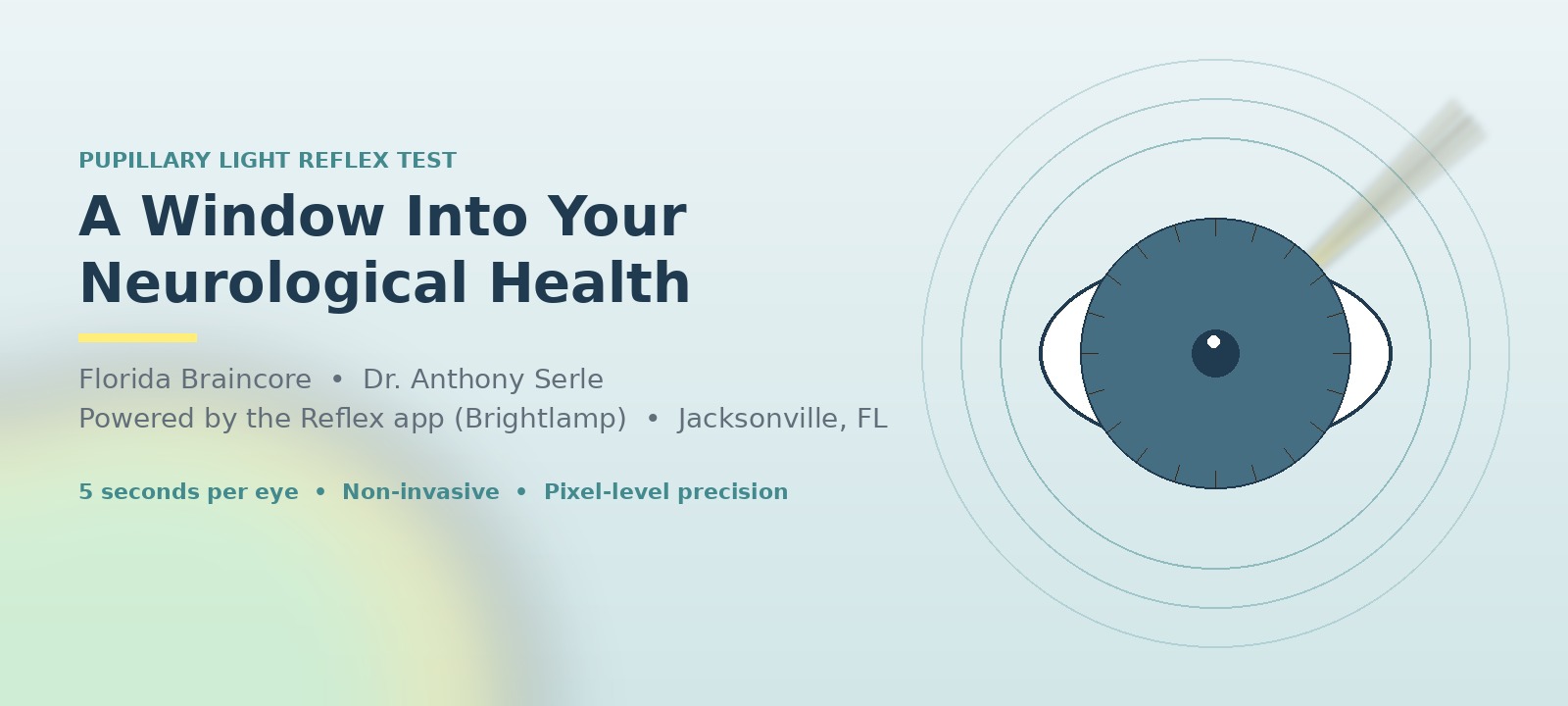
Your pupils do more than respond to light. They reflect the health of the pathways running through your brainstem, autonomic nervous system, and optic nerves. With a brief, non-invasive test, Dr. Serle can gather objective data about how your nervous system is functioning, information that would otherwise require a great deal of guesswork.
At Personalizing Your Health, we use the Reflex app, a clinically validated, smartphone-based tool developed by Brightlamp that measures the Pupillary Light Reflex (PLR) with precision no penlight can match. It takes about five seconds. The data it captures can be invaluable.
What Is the Pupillary Light Reflex?
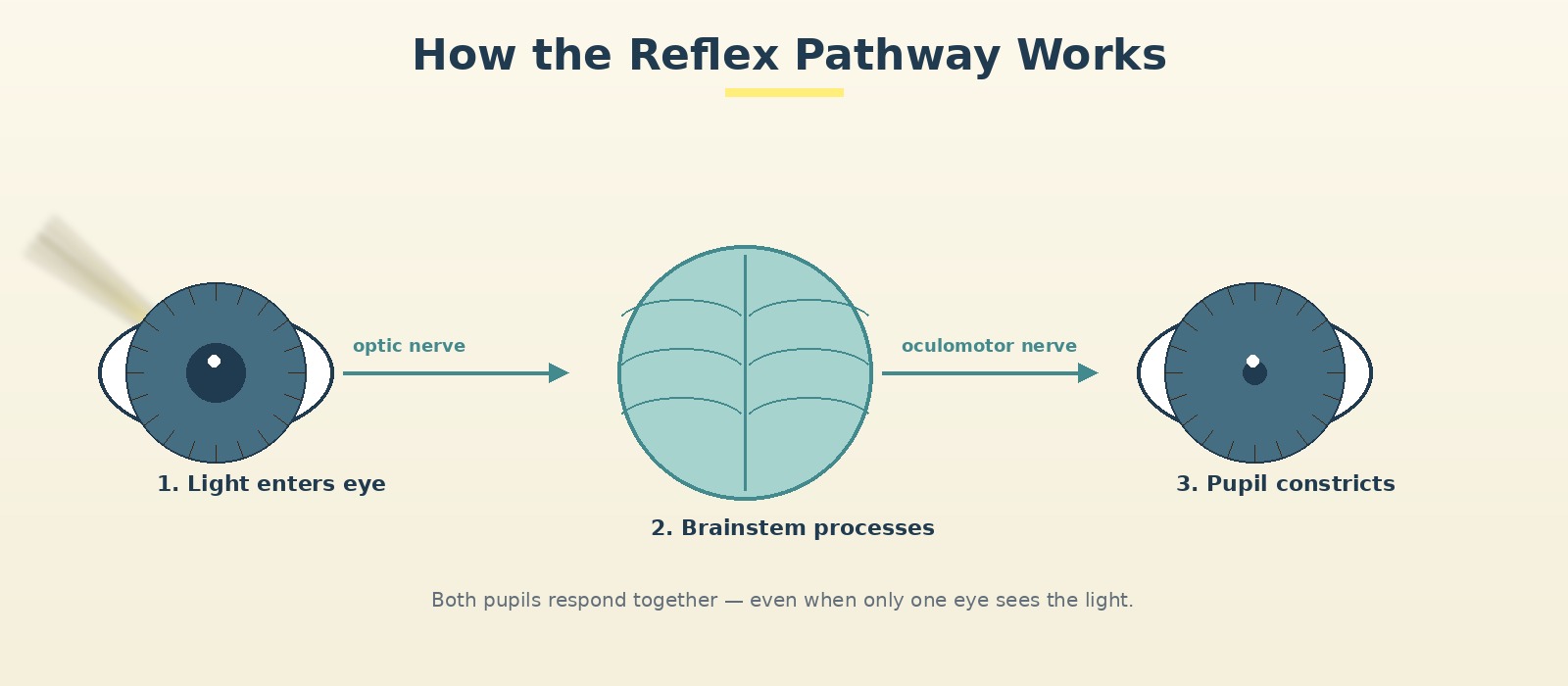
When a light shines into your eye, your pupil constricts automatically. That reflex does not happen in the eye alone. A signal travels along the optic nerve to the brain, which processes it and sends a response back through the oculomotor nerve, instructing the iris muscles to adjust. When the system is functioning properly, both pupils respond together, even when only one eye is exposed to light.
This reflex pathway passes through several critical neurological structures, including the brainstem and the autonomic nervous system. That is exactly why it is so informative. When any part of the pathway is under stress, injured, or dysregulated, the reflex changes. The pupils may respond too slowly, asymmetrically, or in an exaggerated way. These variations are often invisible to the naked eye, but measurable with the right technology.
The PLR is one of the most established neurological assessments in medicine. It has been used in emergency rooms and clinical settings for decades. What has changed is the precision with which it can now be performed.
How the Reflex App Works
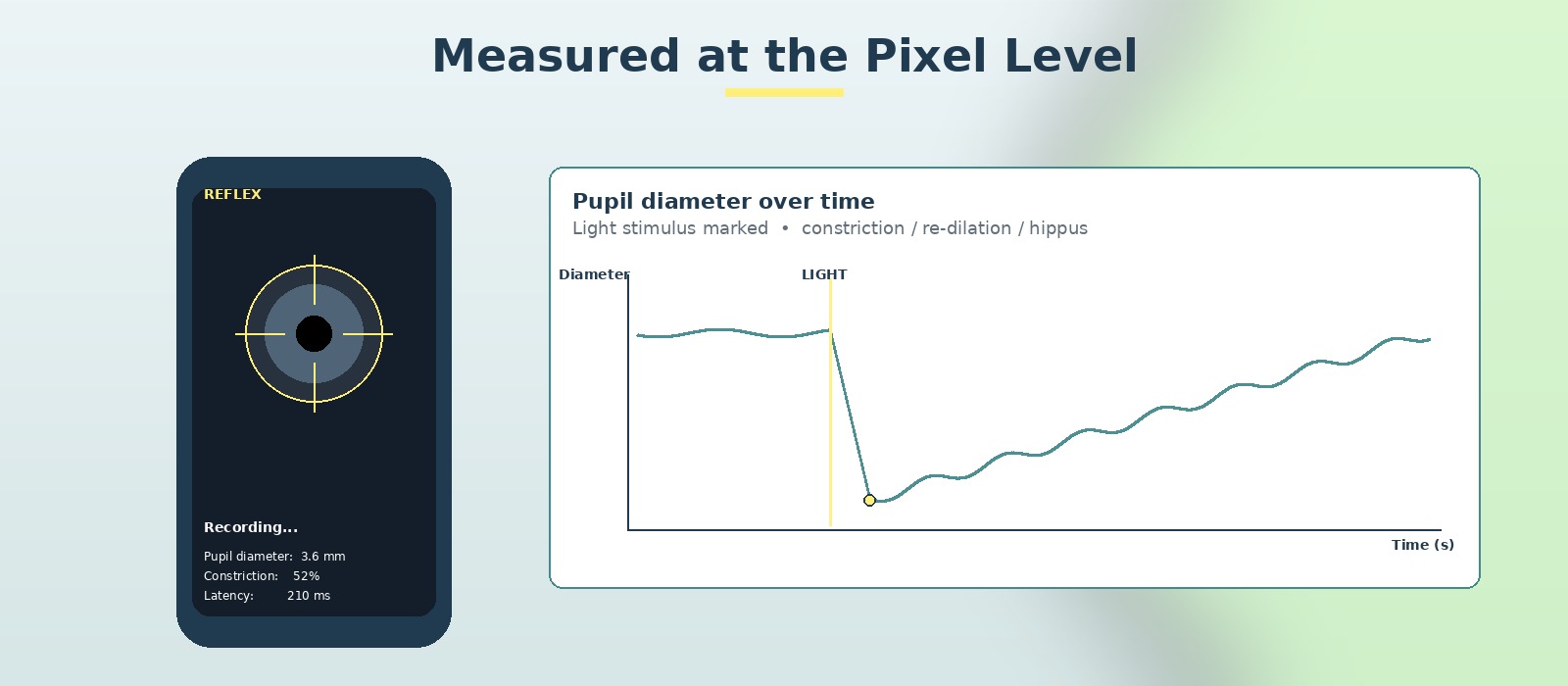
Traditional PLR testing relies on a clinician shining a penlight into a patient's eye and observing the response. The challenge is that this method depends heavily on the examiner's judgment. Two clinicians may interpret the same result differently, and subtle changes over time are nearly impossible to track reliably by eye alone.
The Reflex app, produced by Brightlamp (a Class I 510(k) Exempt Medical Device), changes that. Dr. Serle uses the app on a smartphone or tablet, and the device's camera captures your pupillary response in real time using advanced computer vision. Every measurement is recorded at the pixel level, capturing details like the speed of constriction, the degree of dilation, response latency, and a phenomenon called hippus (the subtle oscillation of the pupil) that no human eye can accurately track.
The result is a set of objective, repeatable measurements. Because the data is digital and stored, results from one visit can be compared directly to results from the next, making it possible to monitor change over time and assess whether a treatment approach is producing results.
What the Test May Help Identify
The PLR pathway is deeply integrated with several systems that Dr. Serle monitors as part of the Brain-Immune-Gut (B.I.G.) Connection framework. Disruptions in this pathway may point to a range of neurological or autonomic concerns, including:
- Traumatic brain injury and concussion, research involving more than 20,000 subjects has demonstrated measurable, lasting differences in PLR measurements in patients who have experienced concussion. The test may support both diagnosis and recovery monitoring.
- Autonomic nervous system dysfunction (dysautonomia), because the PLR pathway runs through the autonomic nervous system, irregularities may reflect broader issues with how the body regulates itself, including heart rate, digestion, and inflammation.
- Neuroinflammation, slowed or irregular pupil responses may correlate with inflammatory processes affecting brain function.
- Cognitive changes and neurodegenerative conditions, emerging research indicates that pupillary dynamics shift predictably with cognitive age, making quantitative PLR data a potential early biomarker for conditions including Alzheimer's and Parkinson's disease.
- Migraines and headache disorders, autonomic involvement is well documented in migraine pathophysiology, and PLR data may provide useful context for these presentations.
- Post-concussion syndrome and chronic neurological symptoms, for patients who continue experiencing symptoms long after an injury, objective PLR data can help track the nervous system's recovery.
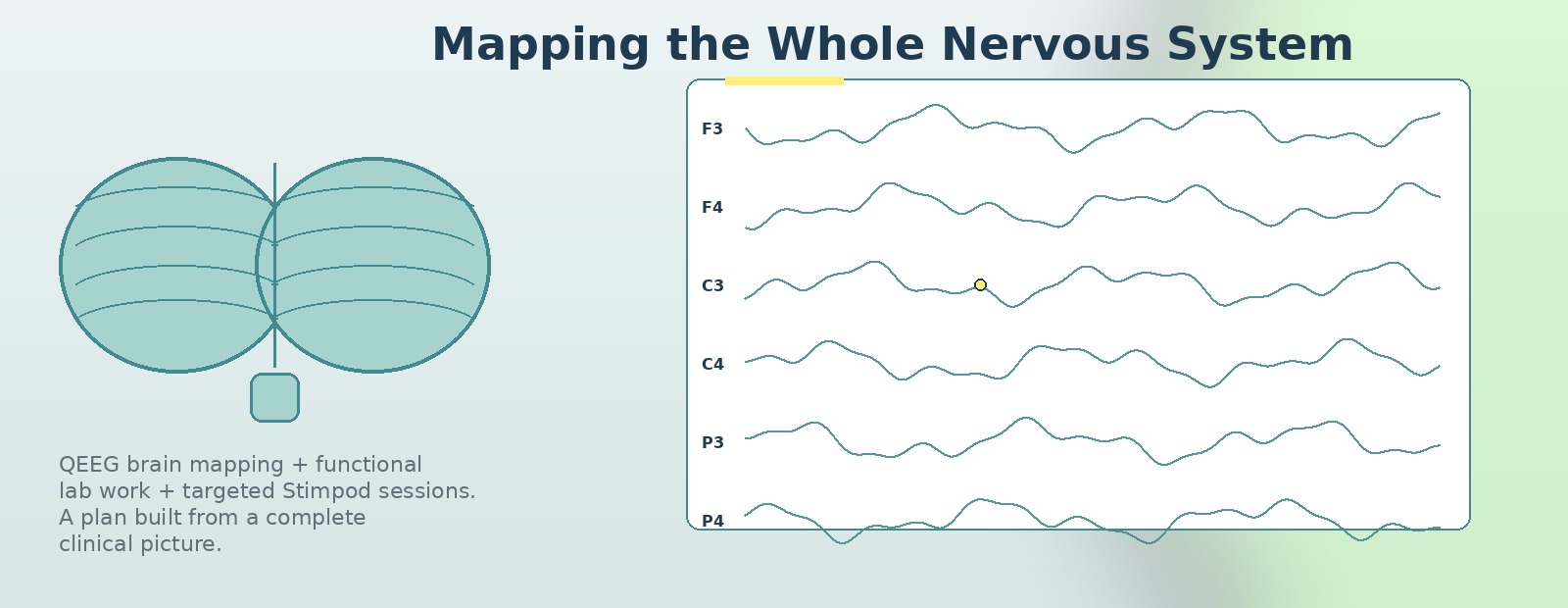
It is important to note that the Pupillary Light Reflex Test is an assessment tool, not a diagnostic instrument on its own. Dr. Serle uses it as part of a broader clinical picture, alongside brain mapping (QEEG), functional lab work, and a detailed patient history.
What to Expect at Your Appointment
How This Connects to the BIG-E Framework
At Personalizing Your Health, the brain is never evaluated in isolation. The Brain-Immune-Gut-Endocrine (BIG-E) Connection is the framework through which Dr. Serle approaches every patient, because the brain, immune system, and gut do not operate independently. They communicate constantly, and dysfunction in one almost always affects the others.
The autonomic nervous system sits at the center of this communication network. It governs gut motility, immune regulation, cardiovascular function, and stress response, and controls the PLR pathway. When a patient presents with chronic digestive problems, immune dysregulation, or inflammatory conditions alongside neurological symptoms, a quantitative assessment of autonomic function becomes particularly relevant.
The Reflex test gives Dr. Serle an objective starting point: how is the nervous system actually performing, right now, at the level of its most fundamental reflexive pathways? That data, combined with gut health markers and immune function labs, builds the kind of complete clinical picture that conventional medicine rarely takes the time to assemble.
What to Expect During Your Test
The Pupillary Light Reflex Test is brief, comfortable, and entirely non-invasive. No eye drops, no dilation, and no discomfort are involved.
During your visit, Dr. Serle will use the Reflex app on a smartphone or tablet to record your pupil's response to a standardized light stimulus. The process takes approximately five seconds per eye. The app generates a detailed report of your pupillary measurements, which Dr. Serle will review with you as part of your overall evaluation. If this is part of an ongoing care plan, your results will be compared with previous recordings to track how your nervous system responds over time.
The test may be included as part of a new patient neurological assessment, a post-concussion evaluation, an autonomic function workup, or a progress check for patients already enrolled in a neurofeedback program.
A Level of Neurological Insight That Goes Further
Quantitative pupillometry is one of several objective tools that set Dr. Serle apart from standard functional medicine and neurology practices. When paired with brain mapping (QEEG) and a comprehensive B.I.G. Connection evaluation, it provides a level of neurological insight that simply is not available elsewhere in the Jacksonville area.
If you are dealing with chronic neurological symptoms, a history of head trauma, cognitive concerns, or conditions that seem to involve both the brain and the body, this type of objective assessment may be a meaningful next step.
Ready to See What Your Nervous System Is Doing?
Contact Personalizing Your Health to learn more about the Pupillary Light Reflex Test and what a full neurological evaluation with Dr. Serle involves.
Disclaimer
The information outlined here is not intended as a substitute for personalized medical advice The information written here should not be construed as a claim or representation that any procedure or product mentioned constitutes a specific cure, palliative or ameliorative. Procedures and products described should be considered as adjunctive to other accepted procedures, deemed necessary by the attending, licensed doctor (Dr. Serle).
It is the concern of the Department of Health and Human Services that no homeopathic and/or nutritional supplements be used to replace established, conventional medical approached especially in cases of emergencies, serious or life-threatening diseases or conditions.
Dr. Serle shares in this concern, as replacing conventional treatment with such remedies, especially in serious cases, may deprive the patient of necessary treatment and thereby cause harm and could pose a major legal liability for the health professional involved. Do not use formulas as replacements for conventional medical treatment.
Schedule a Consult
with Dr. Serle Today!
He’s helped thousands of people get to the root cause of their condition, eliminating symptoms, and reclaiming their vitality. It will take hard work and commitment but it will be well worth it to you and your family.